Vials made of extremely tough glass are being made by the million to hold Covid vaccines.
from BBC News - Technology https://ift.tt/2NOymsk
Monday, February 1, 2021

Former Asana employees want to take on Discord with a positive platform for creator communities
In a creator-economy world, if you’re only as good as your last YouTube video, then your next YouTube video had better be bigger and louder than the last.
Vibely, a new startup co-founded by Asana alumni Teri Yu and Theresa Lee, wants to turn the constant, and often exhausting, beast of content creation on its head. The startup has created a premium, creator-controlled community platform that allows fans to gather and be monetized in new ways, beyond what is possible on YouTube or TikTok.
The core of Vibely, and what the co-founders hope will keep users coming back, is the ability to let any creator make a challenge for their fans to enjoy. For example, a creator whose brand evokes thoughtfulness could ask fans to sketch out their personal growth goals or take action around a new year’s resolution everyday. Or a fitness influencer could motivate fans to work out for a sprint of days.
“Most people in the creator economy are thinking about how to immediately monetize and get that instant gratification of like money here,” Yu said, which is why creators sell merchandise or hop on Cameo. “We’re focusing on long-term strategic communities.” Yu describes her startup’s shift as a mindset change, from a linear relationship between creators and fans to a multi-directional relationship between fans, superfans, new fans and creators.
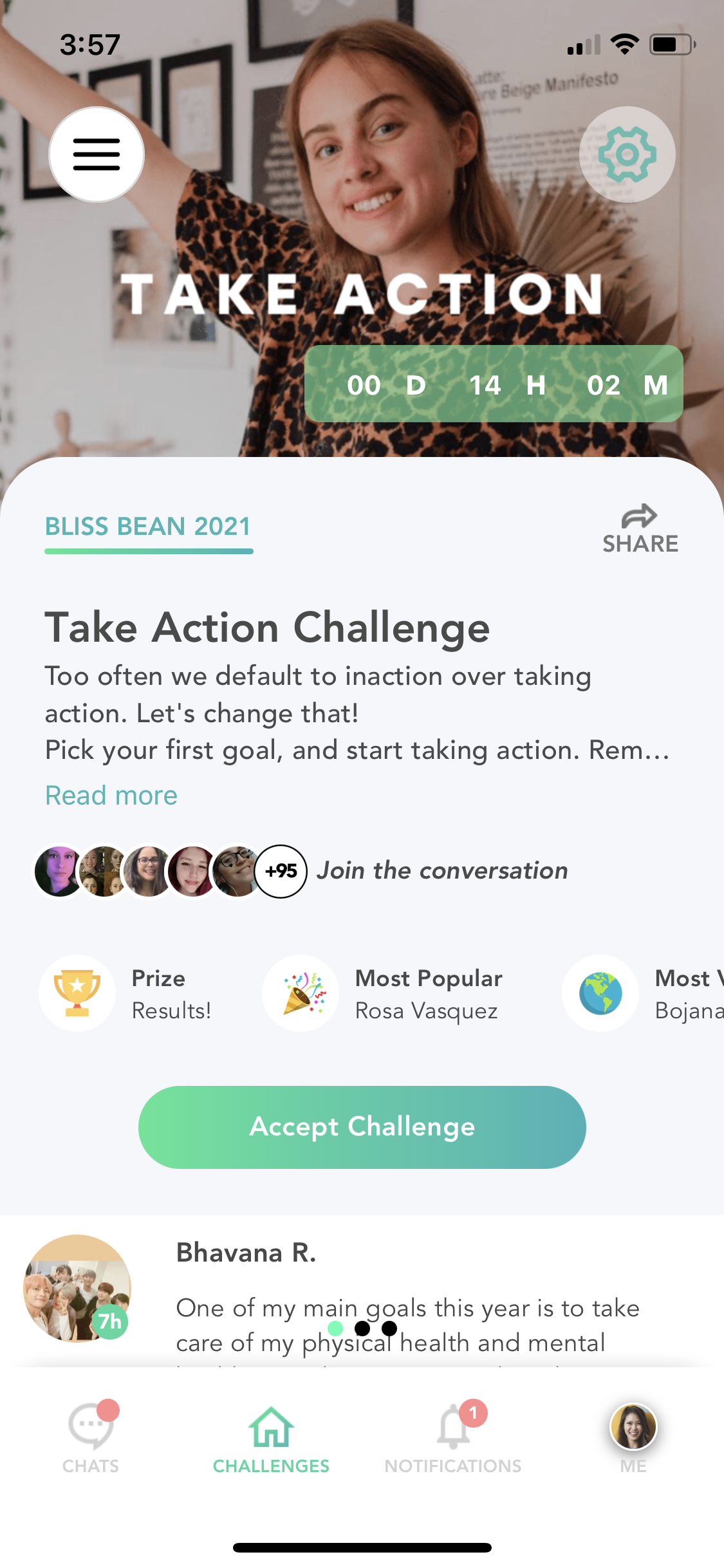
Image Credits: Vibely
Vibely’s pitch is two-fold. For fans, the platform gives them a chance to chat with other fans from around the world. It also lets fans participate in community challenges and have a place to plan virtual hangouts over shared love for makeup or dance. The startup helps creators simultaneously, by giving them a one-stop shop to announce plans, do call to actions and create an ambassador program. It lets the “creator scale their time and have a multi-directional relationship with the community under or beneath them.”
Notably, Vibely is trying to be different from Patreon or OnlyFans, which is basically paywalled content for fans. Vibely doesn’t need creators to post more content, it just needs them to pop into a premium community and interact with fans in a meaningful way.
The startup is formalizing a sporadic daily occurrence: When a creator posts content, their comment sections in YouTube, Instagram and TikTok light up with fans discussing every detail you can imagine, from a suggestive hair flip to if that background poster has a hidden message. Creators often pop in to respond to a spicy thread or a random compliment, which incentivizes fans to keep swarming the content section.
The startup has spent little on customer acquisition cost and relied heavily on word of mouth. In December, Vibely launched a part-in-person, part-virtual creator house to pair top TikTok creators with their followers, generating some buzz. In 2020, Vibely had more than 600 communities with 392,000 messages sent and 37,000 challenges completed. Creators include Lavendaire, with 1.3 million YouTube subscribers and Rowena Tsai, who has 520,000 subscribers.
Yu says that there is one day where Kim Kardashian might have a community on the platform, but the main “bread and butter” of Vibely is searching for creators who represent a true interest, value or belief system. This can be a book influencer or a religious creator, for example.
“[Creators] are controlling their own destiny,” Yu said. “On Instagram or Facebook, you might create content but the algorithm decides at the end of the day whether or not your audience sees it. With Vibely, they have 100% control since this is their community.” The startup is planning to make money through membership dues and in-app mechanics like social currencies and rewards.
Vibely’s moonshot goal is to be a more positive, and supportive, Discord, a platform used by gamer communities across the world. So far, Yu says that less than .1% of Vibely users have been flagged by other users, although notably would not share total user numbers. There is also an ambassador program that appoints a user to oversee a community, as well as a global community manager on the team.
“The ceiling of where [Discord] can support is really only going to be gamers,” she said. “But creators want to protect their brand right now and make sure people have a positive experience,” so they are looking for another place to set up.
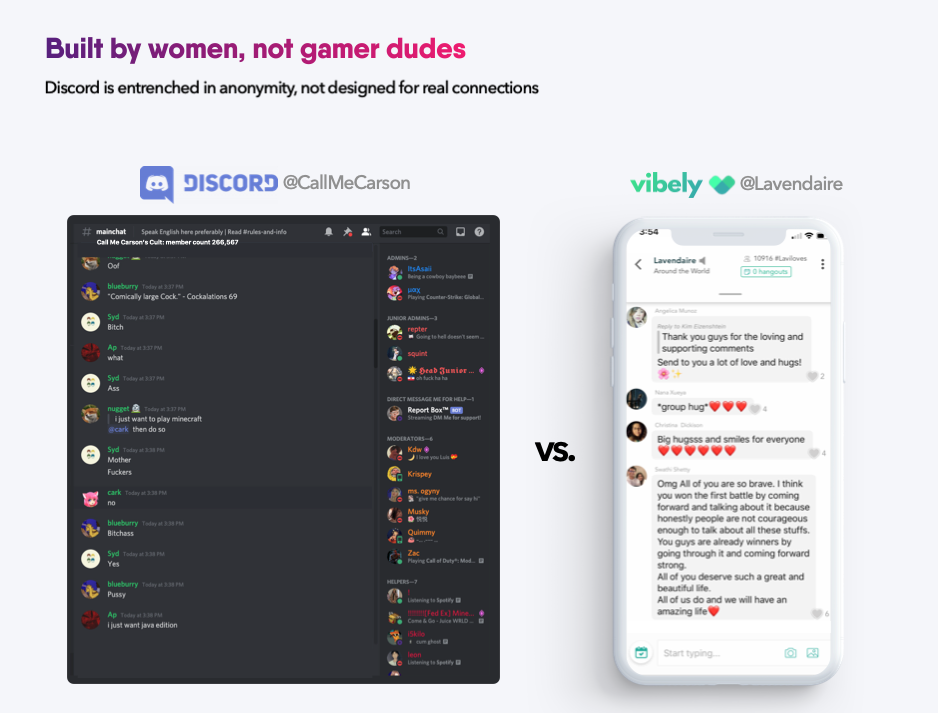
Image Credits: Vibely
While moderation is apparently going well so far, Vibely will most certainly encounter problems as more and more users join its platform. In the world of challenges, craze and hype led by fanatics could potentially become harmful if someone takes it too far. While Vibely aims to be a judgement-free zone for people to connect around the world, scale has a uniquely pessimistic way of forking that from time to time. Some consumer apps have responded to this truth by aggressively hiring on-staff moderators, but that too can become grueling work.
To hit the ground running, Vibely announced today that it has raised $2 million in seed financing from backers including Steve Chen, the co-founder of YouTube; Justin Rosenstein, the co-founder of Asana and co-creator of Netflix’s “Social Dilemma” documentary; Scott Heiferman, the co-founder of Meetup; Turner Novak, formerly an investor at Gelt, and more.

from Social – TechCrunch https://ift.tt/3tcaAqB
Now with over 10M monthly users, IRL turns its events website into a social network
Following its $16 million Series B last fall, event discovery network IRL is launching a new website that adds more social features around events, including profiles, chats and the ability to join group events, among other things. With the changes, users will also be able to receive personalized event recommendations, participate in group events, as well as talk about events with their friends, across both web and mobile. The combined efforts make IRL.com feel less like an online event search engine and more like a real social network.
The startup, which had previously focused on real-world events, could have easily imploded last year due to the COVID-19 pandemic, which effectively shut down the in-person events industry overnight. But it instead quickly pivoted its event discovery app to include virtual events. In April, IRL adapted to the government lockdowns and restrictions on in-person gatherings by indexing online events, like livestreamed concerts, esports events, Zoom parties and more.
The changes, in a way, made IRL more accessible because it became a tool that anyone could use — not only those with the time and money to travel and attend real-world events.
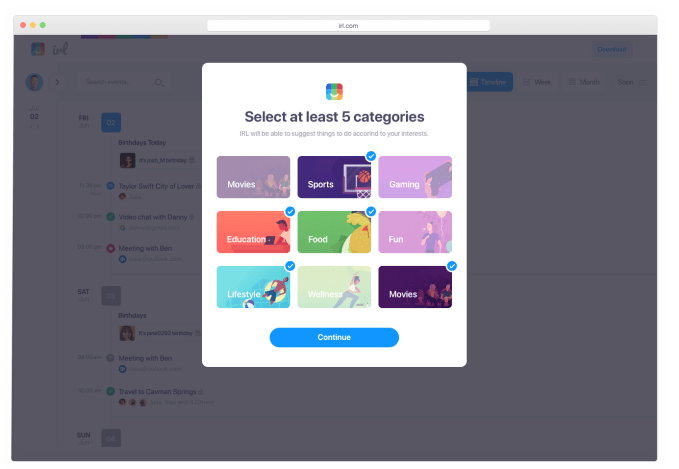
Image Credits: IRL
In fitting with those changes, the company also last year redesigned its mobile app to make it easier for users to find new events to attend remotely.
It organized events into categories like gaming, music, tv, wellness, sports, podcasts, lifestyle and more — including those sourced from partners like TikTok, Meetup, Twitch, Spotify, SoundCloud, HBO, Ticketmaster, Eventbrite and others. (We’re also seeing Apple TV+ shows on the site, but IRL can’t officially confirm if Apple is a partner. We’re told IRL does have permission to display these events, however.)
The new IRL website is meant to better mirror the recently redesigned mobile experience.
As users join IRL.com for the first time, they can pick event categories they’re interested in and find their friends who are already using the service.
Also like the mobile app, you can now click across filters at the top of the website to drill down into events by category — like gaming, music, TV, sports, wellness, lifestyle, podcasts and others. And you can filter to see events taking place this weekend or view IRL’s own suggestions of “Top Picks.”
The site directs users to create their own group events with friends through the new built-in chat feature, which had previously only been available on mobile.
“Because everybody’s at home, there’s a big demand for a web messenger,” notes IRL founder and CEO Abraham Shafi.
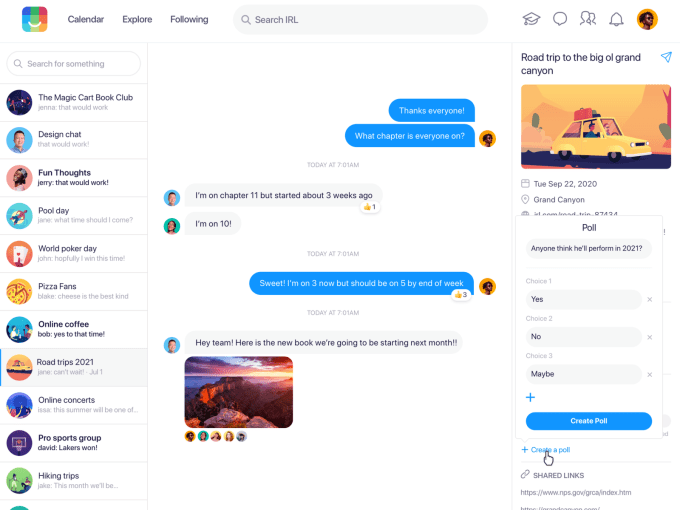
Image Credits: IRL
He explains that the startup’s focus around messaging as the basis for a group is what allows IRL to differentiate itself from other groups-focused products. Facebook Groups, for example, are built around the idea of discussion boards, he says. But IRL is instead building its social network around messaging.
“There’s no group chatting app that also allows you to add events,” Shafi says. “We’re seeing that become really valuable for any groups that have upcoming and scheduled activities. It could be a TV show that you really like. Or it could be your friends playing Among Us or playing video games. [On IRL], you can imagine, literally, any type of group — like a book club that meets weekly and has weekly events coming up,” he says.
In addition, students who sign up with an .edu email address can now find on-campus events and groups that are available only to those who attend the same school. These aren’t typically indexed publicly and won’t appear on the IRL homepage.
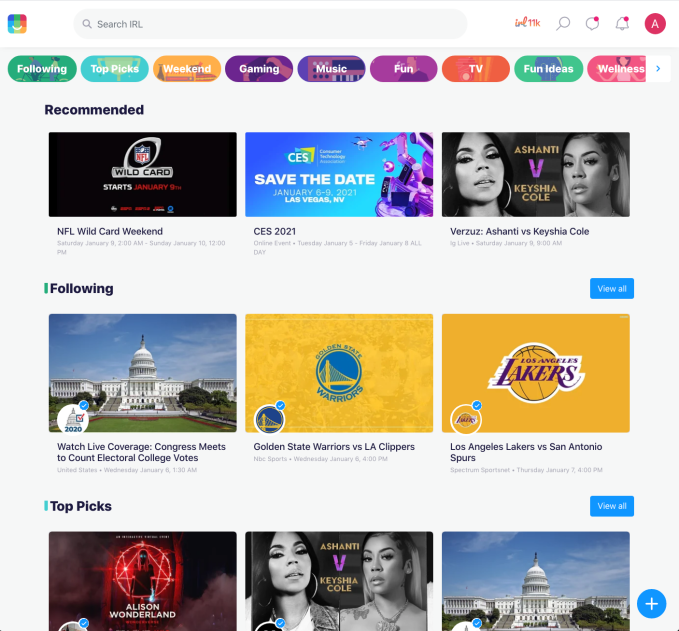
Image Credits: IRL
The startup’s focus on group messaging has helped the app grow, despite the pandemic.
The company now reports over 10 million monthly active users, and its group messaging feature has been growing at around 30% month over month since August. Today, there are over 30 million chats sent on IRL per day, with over a billion chats that have been sent to date, Shafi says.
In time, IRL plans to expand the site to include more local events as well as deepen its relationship with partners.
For example, the IRL TikTok account has been the first to reach over a million followers. But currently, all the events TikTok posts to the site are hand-curated. IRL says it’s working on a deeper integration that will help pull in more TikTok content, including top trends.
The company also expects to attract more influencers with the website launch, like those who want to build a name for themselves as a “cool curator” of a specific type of event — such as the Sneakerheads account, for instance, which tracks sneaker drops.
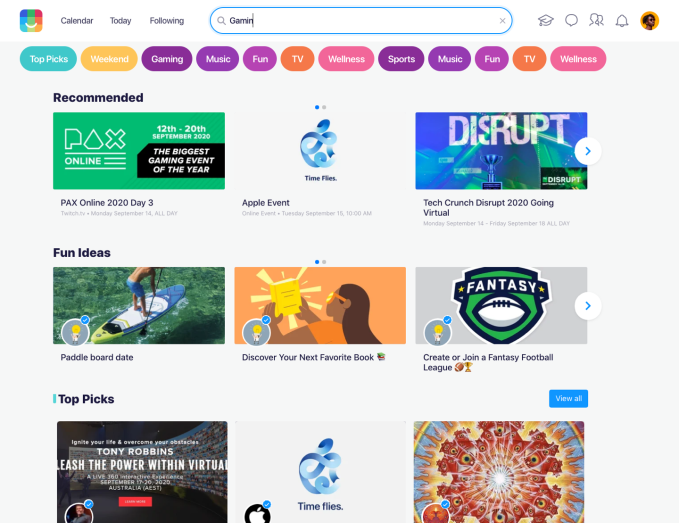
Image Credits: IRL
As users participate on the website and app by following events, adding friends, and joining chats, IRL will be able to make better recommendations as to what sort of events they might like to try next.
And as the world recovers from COVID, allowing in-person events once again, the company believes usage will jump.
“When in-person returns — because that’s inevitable — we’ll be supporting that, for sure,” says Shafi, adding that he expects IRL to then “explode.”
“We’re not going to take virtual away. Virtual will always be there … quite honestly, it will probably always be a hybrid,” he says. “This pandemic has allowed us to focus on something that will actually help us grow once we can support both the real and the remote.”
“Me and the team are very grateful that we’ve had the opportunity to build something deeply meaningful in these times — even though at the outset, it would have seemed like we were screwed,” Shafi adds.
Initially, IRL tested the web app’s revamp only with its existing users. But the relaunch of the site now makes the changes accessible to all.

from Social – TechCrunch https://ift.tt/3oFNipk
Gamer Vikkstar quits Call of Duty: Warzone over cheating
The popular video game streamer said Activision's battle royale title was "saturated with hackers".
from BBC News - Technology https://ift.tt/3oM1vS1
from BBC News - Technology https://ift.tt/3oM1vS1
How to Disable Conversation View in Gmail (Web Version)

It’s no doubt that Gmail is right now the most popular and best email service out there. We use Gmail every day, and it offers some fantastic features. Google itself backs the email service, and it provides 15GB of storage space.
If you have been using Gmail for a while, you might know that it groups every email of the same topic by default. That means, if you send multiple emails to the same contact, it will be listed in a conversation view instead of showing it in separate emails.
It’s one of the useful features that make your Gmail inbox neat and tidy. However, there are times when we want to see each reply individually. So, if you prefer to list messages separately on Gmail, then this article might help you.
Also Read: How to Recover Permanently Deleted Emails in Gmail
How to Disable Conversation View in Gmail (Web Version)
In this article, we will share a step-by-step guide on how to disable the Gmail thread conversation option. Once disabled, you will be able to see each reply individually. So, let’s check out.
Step 1. First of all, login to your Gmail account.

Step 2. Now click on the Settings gear icon to open the options.
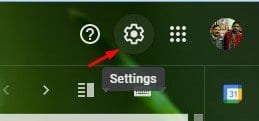
Step 3. Scroll down and uncheck the option ‘Conversation View.’
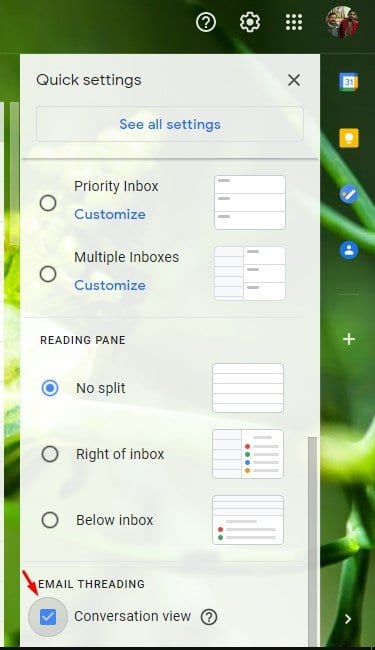
Step 4. On the confirmation popup, click on the ‘Reload’ button.
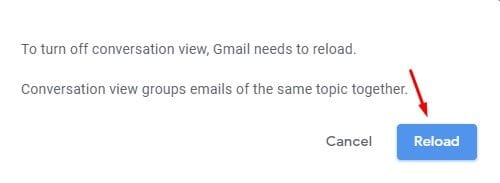
Step 5. Once done, every email reply will be separated. If the method fails, then there’s another method to do the same.
Step 6. Click on the Settings gear icon and click on the ‘See all Settings’ option.
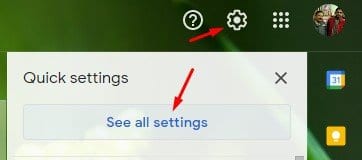
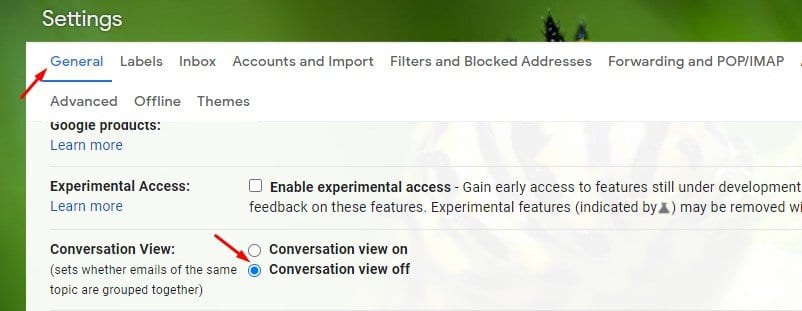
Step 7. On the Settings page, select the General tab and enable the option ‘Conversation view off.’
Step 8. Now scroll down and click on the ‘Save Changes’ button.
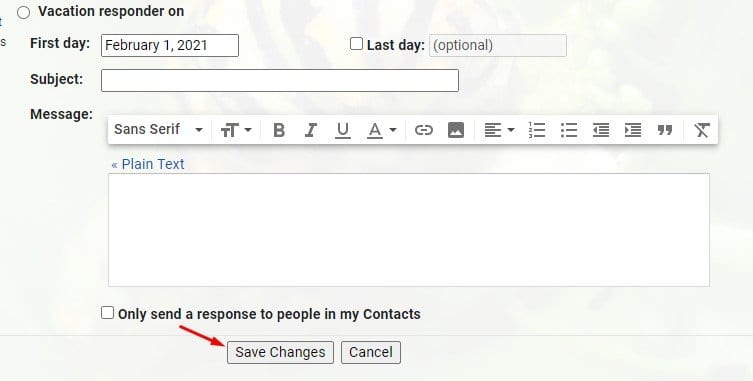
That’s it! You are done. Now Gmail will automatically reload your inbox and will separate each email reply.
That’s it! You are done. This is how you can disable the Conversation view in Gmail. I hope this article helped you! Please share it with your friends also. If you have any doubts related to this, let us know in the comment box below.
The post How to Disable Conversation View in Gmail (Web Version) appeared first on TechViral.
from TechViral https://ift.tt/2NZpSyV
Elon Musk grills Robinhood boss over GameStop row on Clubhouse
The Tesla and SpaceX boss also spoke about Bitcoin, Mars and brain implants.
from BBC News - Technology https://ift.tt/39A5CvQ
from BBC News - Technology https://ift.tt/39A5CvQ
Stardust 1.0: Launch of first commercial launch of biofuel rocket
After several delays, Stardust 1.0 becomes the first rocket powered by bio-derived fuel.
from BBC News - Technology https://ift.tt/3py3YAx
from BBC News - Technology https://ift.tt/3py3YAx
Subscribe to:
Posts (Atom)